Published on 29 September 2026 · 8 min read
Your espresso tastes sour or bitter — what to do
Almost everyone starting with espresso runs into one of two tastes, and confuses them with each other. Sour and bitter sound like preferences, but they are readings: they say exactly whether too little or too much came out of the coffee. Once you know which of the two you are tasting, you know which dial to turn — and there is really only one.
Sour means too little, bitter means too much
Water pulls the flavours out of ground coffee in a fixed order. Acids first, then sugars, then the bitter compounds. Stop too early and you mostly have acid; run too long and the bitter compounds you did not want come along.
That is the whole theory, and it makes the two tastes diagnostic. Sour is not "wrong beans" and bitter is not "too strong" — they are two ends of one scale, and your shot sits somewhere on it.
- Sharp, sour, salty, thin at the end: under-extraction. Too little came out.
- Bitter, drying, smoky, a tongue that keeps rasping: over-extraction. Too much.
- Full, sweet, with a finish that lingers: right.
Taste the difference before changing anything
Sour and bitter are easier to separate once you know where to look. Sour arrives at the front of the tongue and immediately, like lemon or vinegar, and fades quickly. Bitter arrives at the back and stays, leaving a dry feeling as though you bit a teabag.
Not sure? Sip water and taste again. Whatever is still in your mouth after five seconds is the bitter part.
The usual confusion is this: people call an under-extracted shot "too strong" because it is sharp. Strength and extraction are different things. A thin, sour shot can carry plenty of caffeine.
Change one thing, and make it the grind
With a fixed dose and a fixed yield, the grind is your steering wheel. Finer means more resistance, a slower run, more extraction. Coarser does the opposite.
Sour shot: grind finer. Bitter shot: grind coarser. One step at a time, and throw away the first few grams after adjusting — there is always coffee left in the grinder from the previous setting.
Do not change your dose, your beans and your time at once. Then you will not know what helped, and that is how people spend weeks bouncing between two bad shots.
- Too sour → grind finer.
- Too bitter → grind coarser.
- One adjustment per shot. More is guessing.
When it is not the grind
Sometimes a shot tastes watery and bitter at once, and that is not a point on the scale — that is channeling. The water found a path past the puck rather than through it, so part of the coffee is exhausted while the rest is barely touched. You taste both extremes in one cup.
The grind will not fix that; filling will. Break up the clumps before you tamp, and tamp level. Water always takes the thinnest side.
The second exception is temperature. A machine that has not warmed through gives sour shots however fine you grind. Leave it ten to fifteen minutes after switching on, and flush the group once.
The two things that most often actually cause it
Old beans. Coffee roasted three months ago tastes flat and stale, and no setting brings it back. Look for a roast date on the bag rather than a best-before, and buy amounts you finish within a month.
No scale. Espresso is a ratio — roughly eighteen grams dry to thirty-six in the cup — and without a scale you are estimating both. Two grams out on eighteen is over ten percent, which is larger than the difference you are trying to correct by grinding.
A bean-to-cup has the same scale, fewer dials
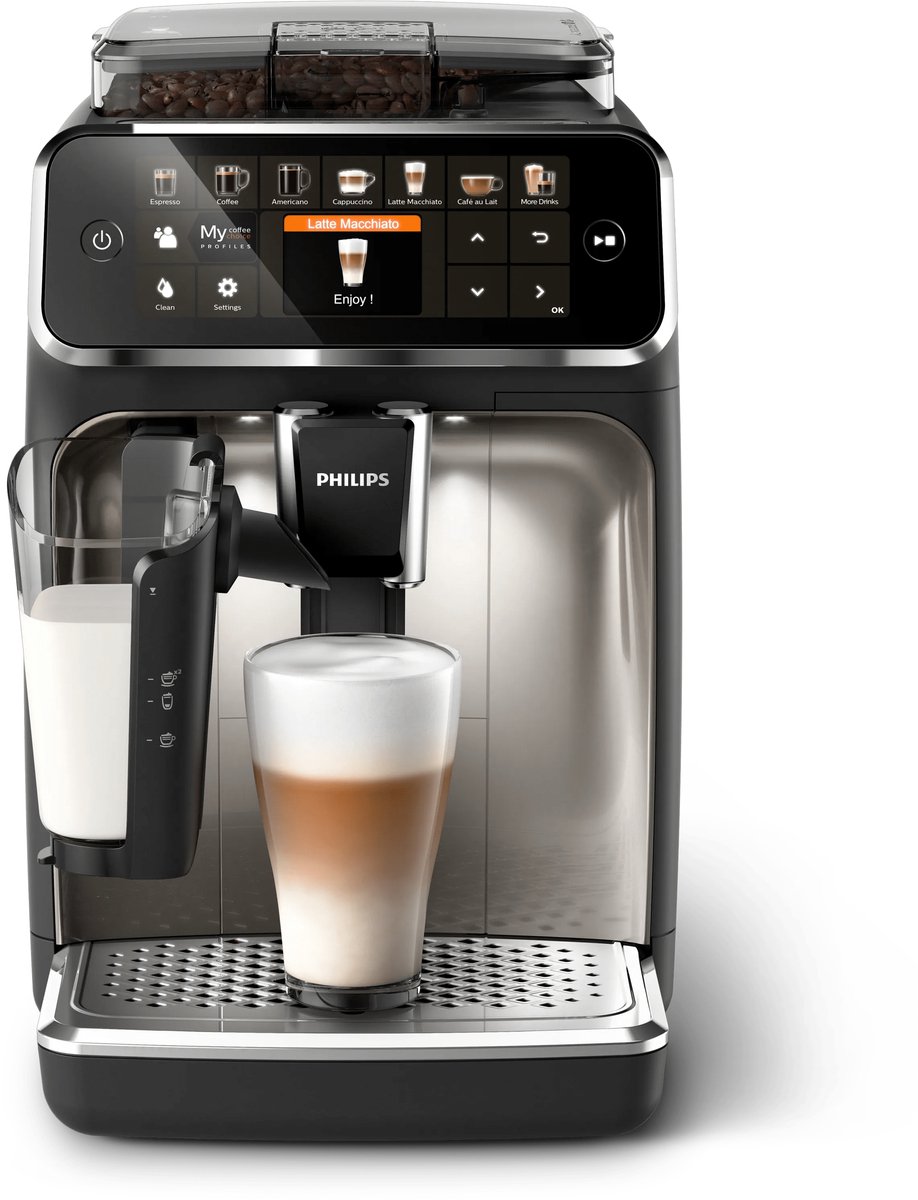
A bean-to-cup can brew sour or bitter too, and the logic does not change. Only the controls differ: you set the grind with the dial inside the hopper, usually while the grinder runs, and change the water per cup in the menu.
Sour? Grind finer or take less water per cup. Bitter? Grind coarser or a little more water. Move in small steps here as well, and accept that a bean-to-cup will not take you as far as a portafilter machine — that is the trade you made for the convenience.